
The AI Scarcity Paradox: When Anything Can Be Generated, Humanity Is the Moat
AI makes content infinite, and infinite content feels like nothing. The best-funded AI video app in history collapsed within months while Gen Z moviegoing rose. The rarest thing online is now undeniably human work.

The obvious objection to everything in the entertainment-as-infrastructure case is AI. If anyone can generate video in seconds, why invest in production at all?
The answer is a paradox: when anything can be created instantly, nothing feels rare. And when nothing feels rare, people go looking for what is real.
The market already ruled
OpenAI's Sora 2 crossed 1M downloads faster than ChatGPT at launch. Then downloads fell 32% month over month in December 2025 and another 45% in January 2026. In late March 2026, OpenAI announced it was shutting the app down. Disney cancelled its $1B equity deal. The tool didn't fail technically. Audiences didn't stay.
People are running toward the real
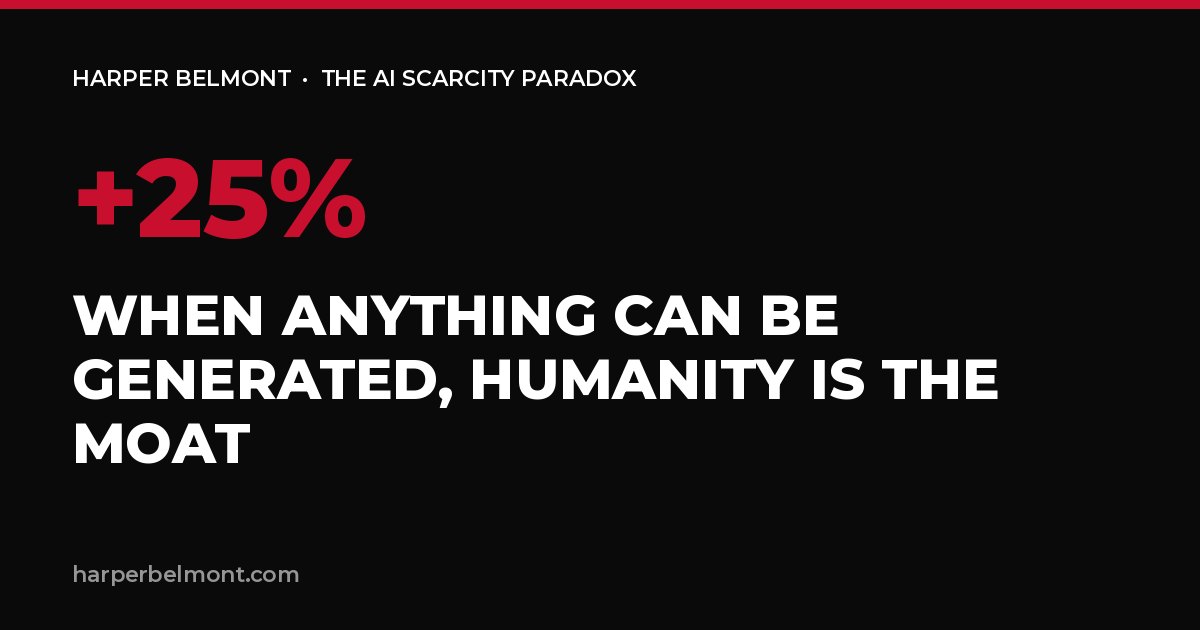
- Gen Z movie attendance is up 25% (Cinema United / NRG).
- The creator economy is projected to reach $1.35T by 2033, from about $252B today (Grand View Research).
- Creator-led TV channels, long-form shows of 22 minutes or more, drew 26B hours of viewing in 2025 across about 6,600 channels (Spotter).
What this means for your video
AI is a powerful tool behind the camera. We use it in editing and post-production every day. But the thing your buyers, investors and recruits are trying to verify is you: your people, your judgment, your work. Generated content can't give them that. Real people on camera, doing real work, can.
Soul scales differently than software. The more the internet fills with generated content, the more valuable the undeniably human becomes.
This article is part of the case laid out in Entertainment Is a Business Driver. Want to see where your own video stands? Take the two-minute video scorecard.
Sources
Founder & Executive Producer
Ryan Harper founded Harper Belmont Media to help executives, brands, and institutions build authority through high-trust video. With over a decade of experience in documentary-style production, Ryan leads HBM's creative vision and client strategy. He believes video is a public operating system—a strategic pillar that compounds trust over time.
Continue Reading
YouTube: The Broadcast Backbone of Modern Business Strategy
YouTube isn't just a social platform—it's the largest digital broadcast network in history and the second-largest search engine. With 2.7 billion monthly users and 13.4% of all U.S. TV viewing (Nielsen, April 2026), businesses treating YouTube as secondary are already behind.
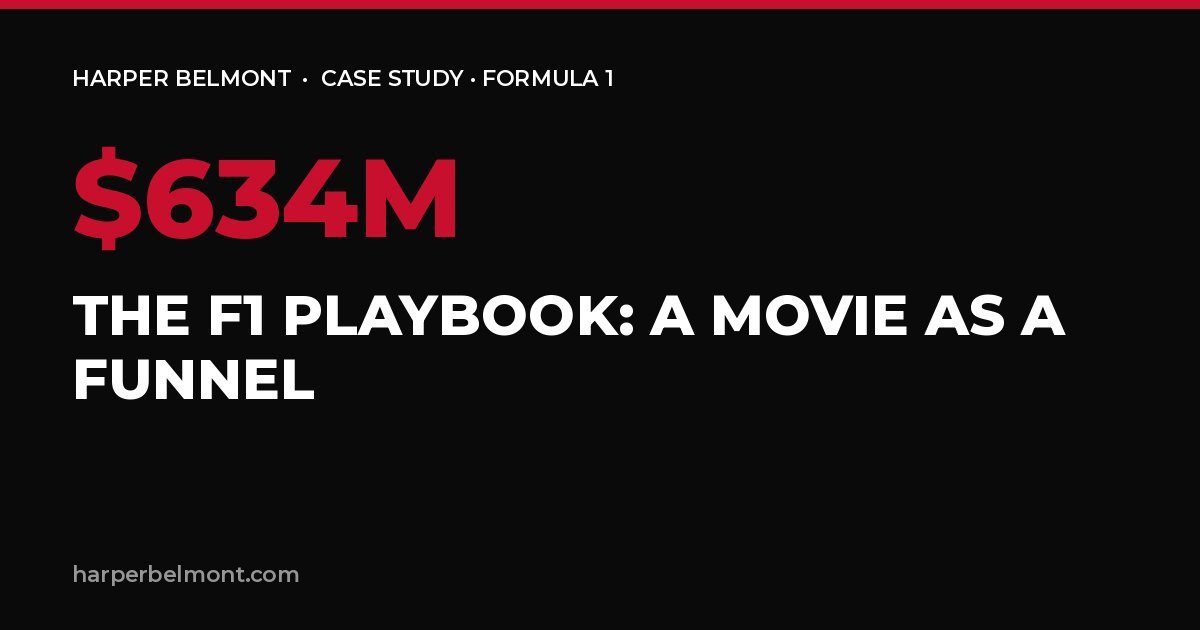
The F1 Playbook: How a Movie Sold $750M in Broadcast Rights
Formula 1 made a movie about itself, then sold the rights to watch. The docuseries, the film, the streaming deal and the sponsorships worked as one funnel. Here is how, and what it means for any business.
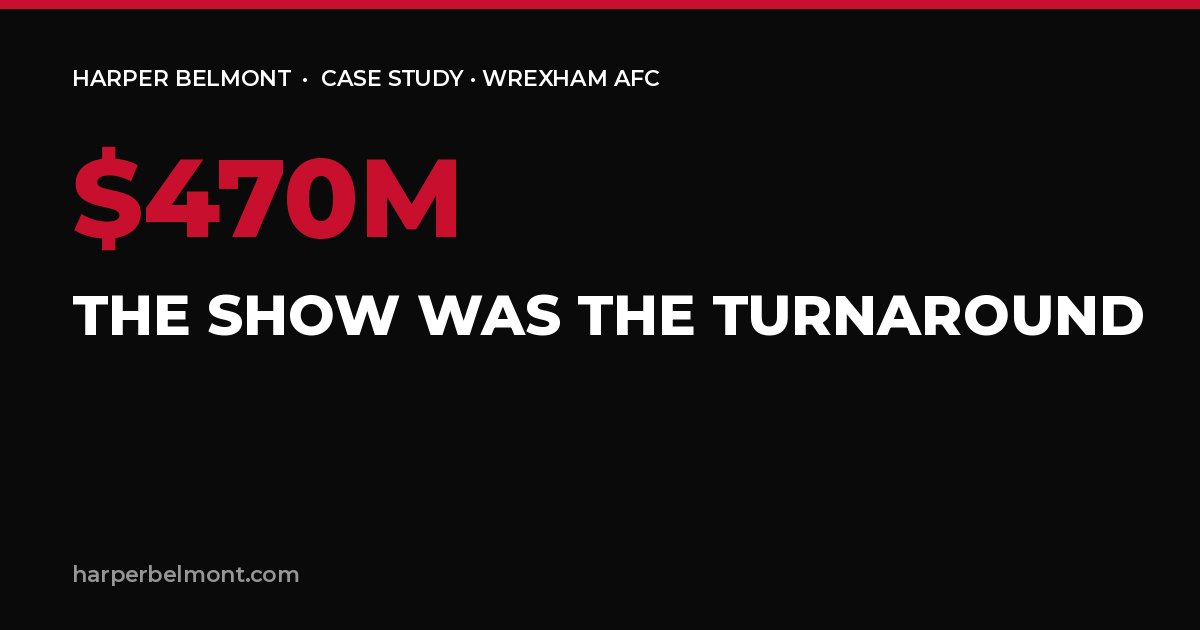
The Wrexham Model: How a Docuseries Turned $2.5M Into $470M
Ryan Reynolds and Rob McElhenney built the documentary before they built the roster. Four years later, a fifth-tier Welsh football club is valued at $470M. The show didn't document the turnaround. The show was the turnaround.