
Shows Don't Feature Products. They Move Markets.
Nobody paid to put chess boards in The Queen's Gambit or Four Seasons in The White Lotus. The commerce happened outside the show, as a byproduct of story. The real question is what happens when the brand is the producer.

This is not product placement. In each of these cases, the brand didn't pay to appear. The show was the product, and the commerce landed outside it.
The evidence
- The Queen's Gambit: the U.S. chess-set market rose 87% (NPD). Chess.com, never mentioned by name, gained 3.2M members.
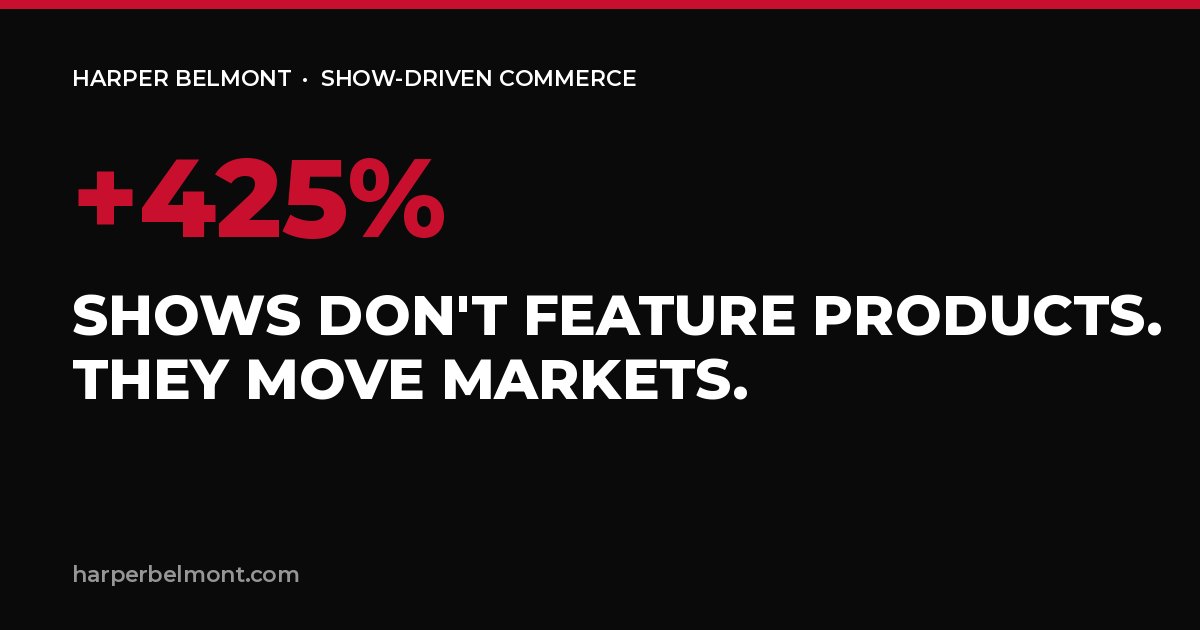
- The White Lotus: Four Seasons Maui website traffic rose 425%. After season two, Sicily hotel traffic rose 193%.
- Outer Banks: Charleston holiday searches rose 319%.
- Emily in Paris: 38% of film tourists to France cited the show (IFOP).
- Yellowstone: an estimated $730M in economic impact to Montana in one year (University of Montana BBER).
- The Bear: Mr. Beef, the real Chicago shop behind the fictional restaurant, has had lines around the block since the premiere.
What if the brand had been the producer?
Each of these brands caught a windfall by accident. Four Seasons hosted The White Lotus; it didn't make it. Brand-backed entertainment means taking part in developing stories that already fit who you are, instead of buying ads around them or paying for placement inside them. When the product is essential to the story, a producer credit beats any placement.
The distance to purchase is collapsing
Walmart and NBCUniversal have made Bravo shows directly shoppable on Peacock, turning a scene into a checkout in under a minute. When the show becomes the storefront, the brand that produced the entertainment owns the whole funnel.
For a business, this is the point
Advertising rents attention. Entertainment creates desire. A firm that produces the story its market wants to watch doesn't just get seen. It shapes what its buyers want.
This article is part of the case laid out in Entertainment Is a Business Driver. Want to see where your own video stands? Take the two-minute video scorecard.
Sources
Founder & Executive Producer
Ryan Harper founded Harper Belmont Media to help executives, brands, and institutions build authority through high-trust video. With over a decade of experience in documentary-style production, Ryan leads HBM's creative vision and client strategy. He believes video is a public operating system—a strategic pillar that compounds trust over time.
Continue Reading
The F1 Playbook: How a Movie Sold $750M in Broadcast Rights
Formula 1 made a movie about itself, then sold the rights to watch. The docuseries, the film, the streaming deal and the sponsorships worked as one funnel. Here is how, and what it means for any business.
The Wrexham Model: How a Docuseries Turned $2.5M Into $470M
Ryan Reynolds and Rob McElhenney built the documentary before they built the roster. Four years later, a fifth-tier Welsh football club is valued at $470M. The show didn't document the turnaround. The show was the turnaround.
"We Invented the Soap Opera": 130 Years of Brands Making Their Own Media
Brand-made entertainment isn't a new idea. It's the original one. For 130 years the most durable companies built media before they built campaigns, then gave it away to the networks. Every force that took it from them has now reversed.